Home · Missions
Missions
Radar from above, landers that cooked
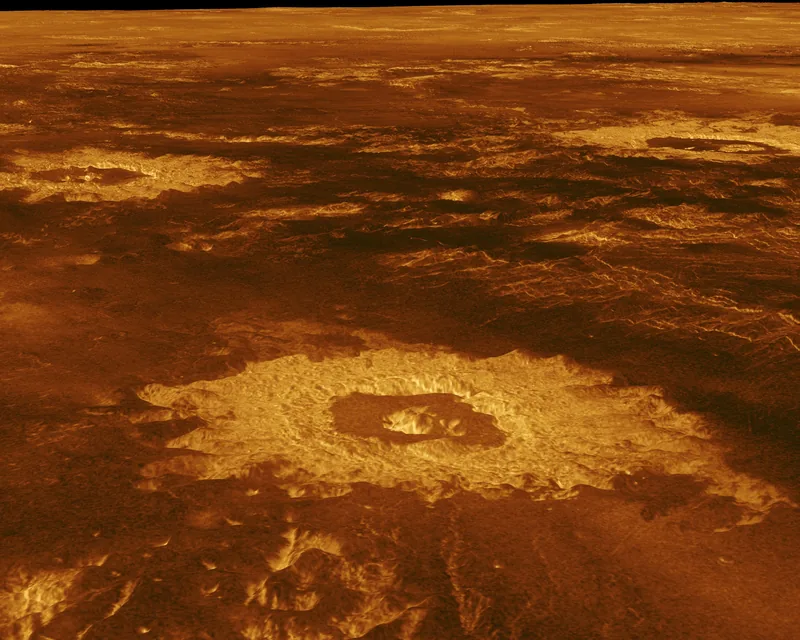
NASA’s Magellan spacecraft, which ended a five-year mission to Venus in 1994, mapped the broiling surface using radar. [NASA Science] NASA describes Magellan as the first spacecraft to image the entire surface of Venus, and the first deep-space probe launched by a space shuttle. [NASA Science] Magellan was launched on 4 May 1989 from Space Shuttle Atlantis, arrived in Venus orbit on 10 August 1990, and contact was lost on 13 October 1994 after the spacecraft was commanded to plunge into the atmosphere. [NASA Science]
Beginning on 15 September 1990, Magellan began returning high-quality radar images of the Venusian terrain. [NASA Science] The first 243-day mapping cycle ended on 15 May 1991 and provided the first clear views of 83.7% of the surface. [NASA Science] A second cycle ended on 15 January 1992, raising coverage to 96%, and a third cycle, ending 13 September 1992, finished coverage at 98%. [NASA Science]
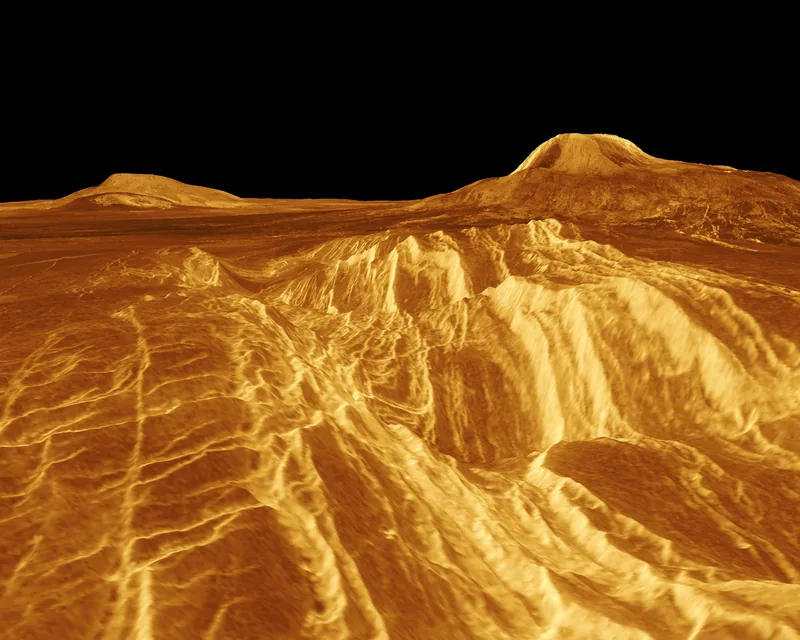
Magellan found that at least 85% of the Venusian surface is covered with volcanic flows. [NASA Science]
The Soviet Union sent a series of Venera probes to Venus between 1961 and 1984. Ten probes made it to the surface; the longest survivor lasted two hours, the shortest 23 minutes. [NASA Science]